ST. LOUIS, MO- Aric Hamilton, a local St. Louis native, is currently in his Junior year at Saint Louis University. Over the past year, Hamilton has been very involved within demonstrations on campus to help promote a more diverse and inclusive environment.
“Personally, I have seen some amazing work from our institution and seen how it can be rooted in community both for and with folks, but I have also seen instances where that trust, belief, and the good work that we do can be eroded by some more negative interactions,” Hamilton said.
“It’s always going to be a tension point in terms of how we foster a sense of diversity, equity, and belonging amongst our students, faculty, staff, and administration.”
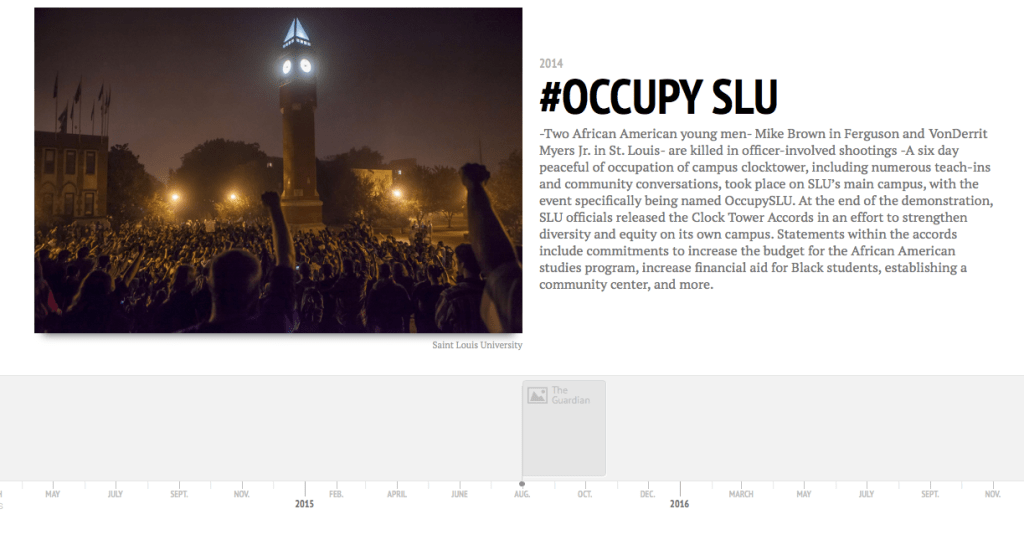
This tension described by Hamilton has been a long-standing issue for SLU. Saint Louis University was founded as a Jesuit institution, seeking to serve its surrounding community. According to SLU’s mission statement, one of the main points of focus for the university is to link its resources to the people of local-as well as national and international-communities to combat ignorance and improve the quality of life for all.
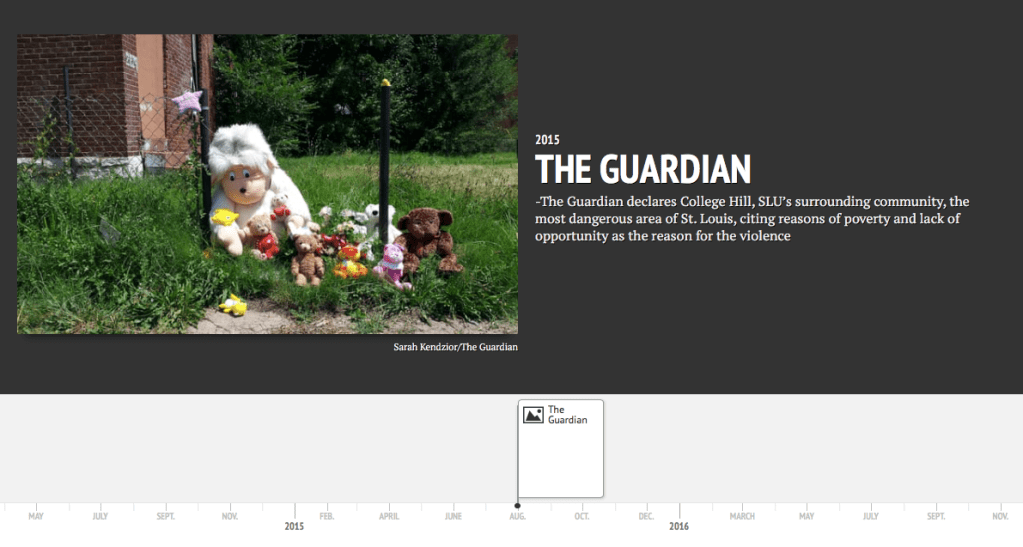
For reference, College Hill, the area surrounding Saint Louis University, fosters a population of 1146 people, with 92.2% identifying as Black. This African American majority is commonplace in many neighborhoods of North St. Louis-such as Hyde Park and Old North St. Louis-with even the city proper as a whole supporting a nearly even White-Black population split, with 46.5% and 46.4% respectively according to the recent 2020 census.
Even though universities of any sort commonly enroll students from across the nation, it would not be totally unreasonable to expect SLU’s student body to at least reflect the diversity of the surrounding area, especially considering SLU’s Jesuit mission. However, according to SLU’s 2021 profile, only 5.5% of the student body identifies as African American, a far cry from the even split of St. Louis or the Black majority of College Hill.
“Rather than invest in the community and young students in our backyard, SLU looks outward not giving these students a chance,” said Luella Loseille, the assistant director of diversity and inclusion at Saint Louis University.
According to Andrea Hitsman, the assistant director of campus visits for the Office of Admissions at SLU, a sizable portion of the University’s student body hails from out-of-state areas, even though COVID-19 has encouraged applicants to apply to more local institutions.
“As you know, most of our students are from the Chicago land area, within upper Illinois, but this year we have had an increase of students who came from the St. Louis area.” Hitsman said.
“We have been building territories in California and Texas.”
SLU’s history with racial discrimination does factor in this discontinuity. Loseille highlights how SLU only became desegregated during the 1940s, and African American students still encountered much unfair treatment. Numerous historical barriers-including high tuition costs, testing score requirements, and aforementioned discriminatory practices- have contributed towards the disproportionate student demographics that can be observed today. Hitsman also pointed to this historical trend as a deterrent for applicants of color.
“Saint Louis University is a Jesuit Catholic institution, and Jesuit Catholic institutions are historically, predominantly white colleges.” Hitsman said.
“There is also a historically black college [Harris-Stowe State University] literally right next door to Saint Louis University’s campus. Would we like to see more students of color on campus? More Black students? Absolutely.”
The neighboring Harris-Stowe State University certainly poses a higher population of students of color, with the University reporting 86% in the fall of 2018. This appearance of segregation from the two institutions can, according to Loseille, be traced back to the racial history of St. Louis: being a border state that supported slavery within 1800s. The status of bordering the Northern and Southern United States brought with it the clashing of values that created a lasting impact of segregation, even during the migration of southern African Americans during the reconstruction period.
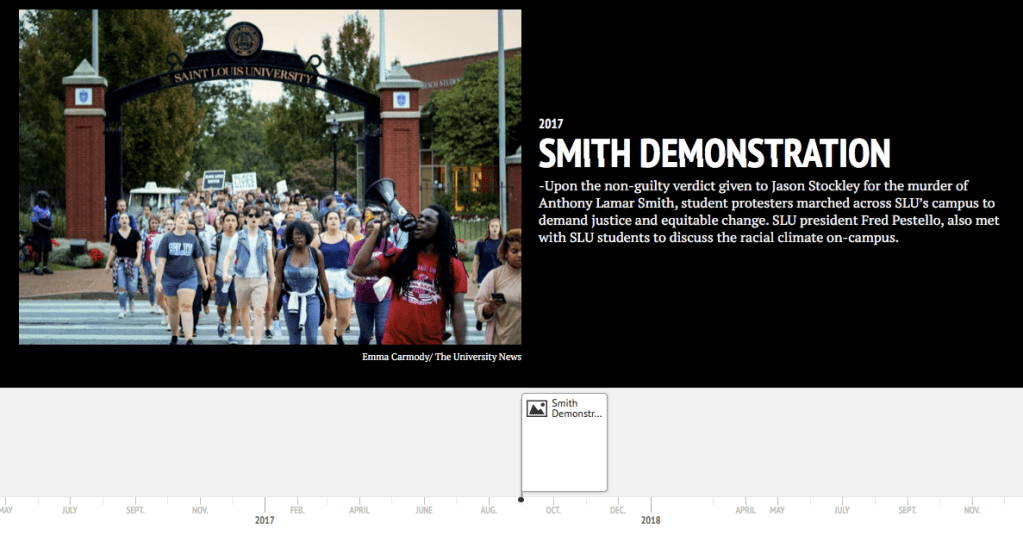
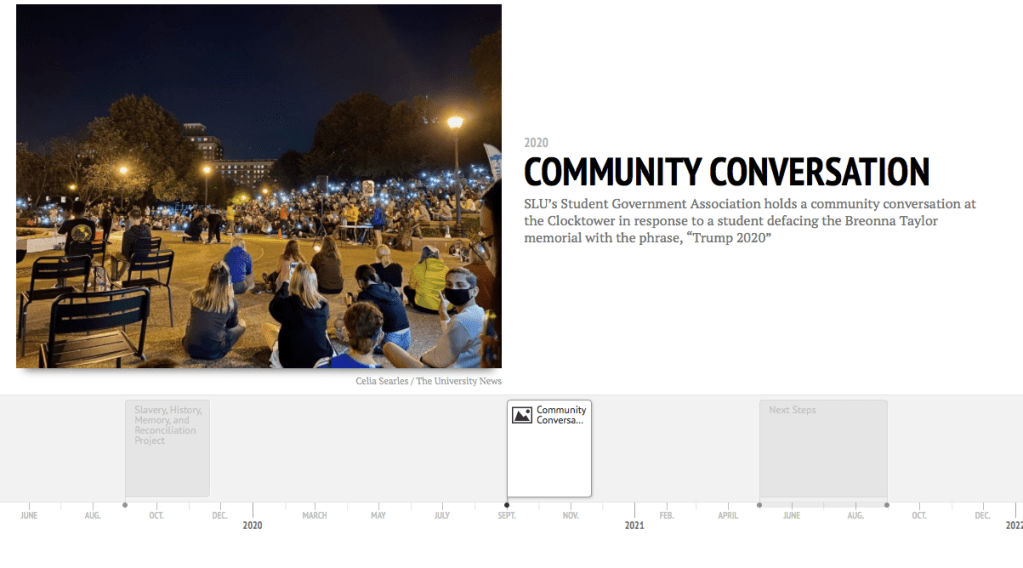

Dismantling this divide requires meeting each other halfway, which is fortunately something SLU has attempted to combat in more recent efforts. SLU’s Cross Cultural Center hosts many services in order to provide support to historically underrepresented communities.
“We do this through efforts grounded in cultivating knowledge and engagement through intentional collaborations, experiences, initiatives and programming,” Loseille said.
“Such as Cultural/Heritage Month celebrations, Diversity Movie Series, International Education Week, Atlas Week, Audre Lorde Scholars Program, African-American Males Scholars (AAMS), Safe Zone Competency Program in addition to various workshops and trainings pertaining to diversity, equity, inclusion, and justice.”
Leah Sweetman, the assistant director of the Center for Social Action, lists several different student organizations currently involved within the communities of North St. Louis.
“There is an organization called Overground Railroad, and they focus on literacy, so they do a lot of tutoring and reading work with kids in a number of schools in North St. Louis,” Sweetman said.
“There are some other organizations. There are some student groups and honor societies who are working in ACT prepwork, college prepwork, high school prepwork, and other kinds of things.”
However, with regards to the faculty of the Center for Social Action, Sweetman acknowledges that they are somewhat shorthanded with their massive workload.
“Right now, we have relations with hundreds of community organizations across the region, but we are a relatively short staff. We have five people on staff and some student staff” Sweetman said.
“We don’t have the capacity to be meeting with all our community partners regularly. If we had another staff member who could do site visits and work with a coalition of partners around a particular area, we could develop more opportunities for students.”
Sweetman was not alone in reporting areas of further development. Hitsman noted how, regarding community outreach, SLU’s Admissions Office was suffering a temporary setback-though SLU is in the process of fixing it.
“It [local outreach] doesn’t have a counselor in it, we were about to do a hiring process,” Hitsman said.
“What we’ll do is come up with a strategic plan on the number of students we would like to recruit from the local St. Louis area, and hopefully the admission counselor that gets this territory will work really hard to build relationships with the counselors, teachers, and principals from these high schools.”
If SLU wants to continue to advance its goals of achieving an equitable campus, then it is advisable that they quickly fill these gaps.
“We have an office in place to help [international] students get acclimated to living in a totally different country. We can do that too for domestic students” Hitsman said.
Despite some of SLU’s shortcomings, Hamilton still maintains a positive outlook regarding SLU’s current work of diversity and inclusion.
“SLU has had an interesting place in my life. My mom attended SLU and graduated from Arts and Sciences in 1994” Hamilton said.
“Deep down, I really do love SLU and I don’t think I could have seen myself engaging in my undergraduate experience anywhere else.”
 Mark Burbridge